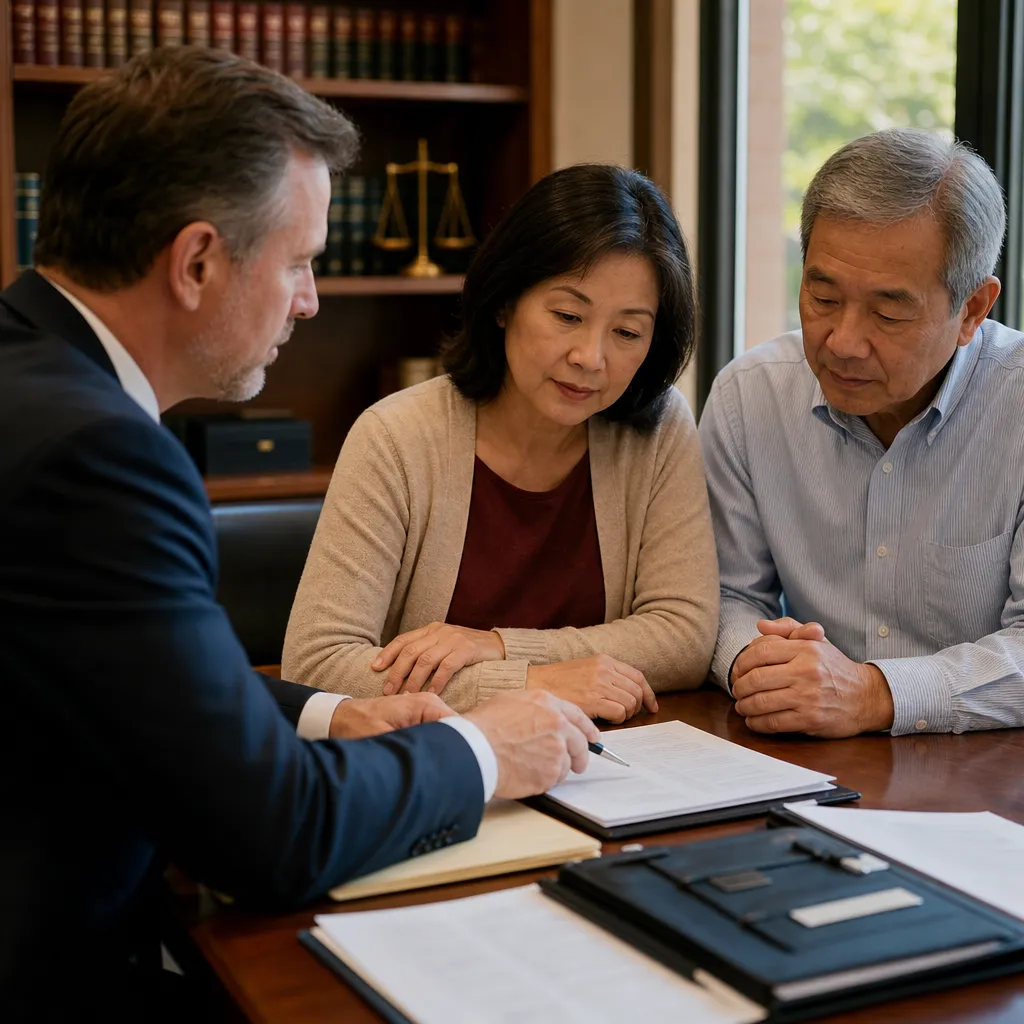
Why Finding the Right Estate Planning Lawyer Matters for Your Family
When you don't have a proper estate plan in place, your family faces uncertainty at exactly the moment they should be grieving and healing. Without clear legal documents, your assets may go through probate court, a lengthy and expensive process that can drain 3-7% of your estate's value before your loved ones see a dime. Worse, if something happens to you suddenly, nobody legally knows your medical wishes or how you want your finances managed.
We've seen families spend tens of thousands in court fees fighting over property that should have been simple to transfer. We've watched guardianship battles unfold when a parent didn't designate who should care for a child with special needs. These situations aren't just stressful; they're preventable.
The right estate planning lawyer helps you sidestep these problems entirely. A qualified attorney understands California law, knows which strategies work best for your specific situation, and documents your wishes in a way that stands up to scrutiny. This isn't about being morbid; it's about giving your family a gift: clarity, protection, and peace of mind.
Your action: Schedule a consultation with someone who listens to your concerns before recommending solutions. Avoid attorneys who offer one-size-fits-all plans.
What to Look for in a San Jose Estate Planning Attorney
Not all attorneys are created equal, and estate planning is too important to settle for someone just going through the motions. Here's what separates the best from the rest.
Experience matters most. Look for an attorney with at least 10-15 years focused on estate planning, wills, and trusts. They should be familiar with California probate code and Santa Clara County court procedures. Ask how many estate plans they've drafted and how many have actually gone through probate administration.
Specialization over generalization. A lawyer who handles everything from bankruptcy to personal injury to estate planning spreads themselves too thin. We focus exclusively on estate planning, trust administration, and probate because mastery requires depth, not breadth.
Credentials and standing. Check whether the attorney is licensed in California, in good standing with the State Bar, and a member of professional organizations like the American College of Trust and Estate Counsel. These aren't just badges; they signal ongoing education and ethical commitment.
Client reviews and referrals. Real testimonials from families in your area reveal how an attorney actually works with clients. Do they explain things clearly? Do they follow up? Do they respect your timeline and budget? Ask for references from recent clients, not just perfect reviews on a website.
Communication style. Estate planning requires discussing sensitive topics: mortality, family dynamics, financial vulnerability. Your attorney should ask thoughtful questions, explain complex concepts in plain English, and never make you feel rushed. If your first conversation feels transactional, keep looking.
Your action: Request a free initial consultation with two or three firms. Pay attention to how they listen and whether their explanations make sense to you.
Understanding Our Comprehensive Estate Planning Services
We don't offer a cookie-cutter approach. Instead, we tailor your estate plan to your unique family structure, financial situation, and goals.
Our core services include revocable living trusts, which let you control your assets during your lifetime and transfer them smoothly after you're gone without probate. For many families in Santa Clara County, a well-drafted revocable trust is the foundation of a solid plan.
We also prepare wills to catch any assets not held in trust and to designate guardians for minor children. Financial powers of attorney let you appoint someone to manage your money if you become incapacitated. Advance health care directives ensure your medical wishes are legally documented so doctors know exactly what you want if you can't speak for yourself.
For families with specific needs, we design special needs trusts to protect assets for a loved one with disabilities without disqualifying them from government benefits. If your family includes beloved pets, our pet trusts ensure your animals are cared for according to your wishes.
We also handle irrevocable life insurance trusts for clients with significant estates who want to minimize tax exposure and keep life insurance proceeds out of probate.
Beyond the documents themselves, we guide you through the thinking process. We ask about your children's maturity levels, your values, your concerns about blended families, and your charitable intentions. This conversation shapes the documents we create, not the other way around.
Your action: List your major assets (home, investments, business interests, digital accounts) and any dependents or special circumstances before your first meeting. This helps us identify which services are most critical for your situation.
How We Help You Avoid Probate with Trusts
Probate is a public court process where a judge oversees the distribution of your estate. In California, it typically takes 9-18 months and costs thousands in attorney and court fees. Your family's financial matters become public record, and disputes can drag the process even longer.
A revocable living trust avoids probate entirely. Here's how it works: you transfer ownership of your major assets (home, brokerage accounts, rental properties) into the trust during your lifetime. You remain the trustee, so you control everything. When you pass away, a successor trustee you've named takes over and distributes assets to your beneficiaries according to your instructions, all outside of court.
One of our clients, a retired couple with investment property and adult children, set up a revocable trust five years ago. When the husband passed last year, his wife and their son (the successor trustee) distributed his half of the assets to their two daughters within three months, with no court involvement and minimal cost. His identical twin brother, who died two years earlier without a trust, left a probate mess that cost his family $40,000 and took over a year to settle.
The trust does need to be properly funded, meaning you actually retitle your assets into the trust's name. Some people create beautiful trusts and then never transfer anything into them. That's where we come in: we ensure the trust is set up correctly and that your assets are titled appropriately.
Your action: Start a list of major assets and their current ownership structure. Bring this to your consultation so we can map out which ones should be transferred into your trust.
Protecting Your Family with Special Needs and Pet Trusts
If someone in your family has a disability, a standard inheritance could actually hurt them. Many government benefits like Supplemental Security Income (SSI) and Medicaid have strict income and asset limits. If a beneficiary suddenly inherits $100,000, they lose their benefits immediately.
A special needs trust solves this problem. Money goes into the trust rather than directly to your family member, and a trustee you appoint can use those funds to pay for supplemental care, education, technology, and quality of life improvements without triggering benefit loss. It's a way to provide generously while protecting your loved one's access to essential programs.
For pet owners, a pet trust ensures your animals aren't left in limbo. You name a caregiver, fund the trust with money for their care, and specify exactly how your pet should live. It's far more reliable than hoping a friend remembers your wishes.
These specialized trusts require careful legal language to work effectively. Many DIY templates miss crucial details that could render them unenforceable or ineffective. We've seen trusts created with good intentions but missing the specific language needed to satisfy benefit agencies or courts.
Your action: If you have a dependent with special needs or multiple pets, mention this early in your consultation. These trusts need particular attention to detail and timing.

Why Local Expertise in Santa Clara County Makes a Difference
California probate law is strict, and Santa Clara County courts have specific preferences and procedures that change periodically. An attorney licensed in another state or unfamiliar with local court requirements might draft documents that technically work but don't align with how Santa Clara judges actually operate.
We understand the local landscape. We know which Santa Clara County probate judges ask tough questions about trust funding. We're familiar with the paperwork the local courts require for trust administration. We understand the neighborhoods in San Jose and what types of family dynamics and property ownership structures are common here.
More importantly, we're your neighbors. When you need a probate attorney three years after we create your trust, we're still here, and we already know your family's history. That continuity matters.
Beyond court procedures, local expertise means understanding regional tax implications, property values, and community-specific concerns. A family business that thrives in San Jose might have unique succession challenges. A home in Palo Alto has different estate planning considerations than a property in East San Jose.
Your action: When interviewing attorneys, ask specifically about their experience with families in your area and with the Santa Clara County probate court process.
Our Client-Centered Approach to Estate Planning
We believe estate planning is a conversation, not a transaction. We start by listening to your priorities, concerns, and dreams for your family's future.
In our initial consultation, we ask about your relationships with family members, your values, and what worries you most. Are you concerned about one child's spending habits? Do you want to encourage grandchildren to pursue education? Do you worry about a spouse being vulnerable to influence from a new partner? These questions shape the documents we create.
We explain everything in plain language. When we talk about trust administration, probate code sections, or tax implications, we translate into real-world terms you can understand. You shouldn't feel confused after meeting with your estate planning attorney; you should feel informed and empowered.
We also respect your budget. Some families need a simple will and power of attorney; others need a comprehensive trust-based plan. We discuss costs upfront and help you prioritize. A $500 advance health care directive is worthless if you can't afford the $2,500 revocable trust that actually protects your home, but sometimes that's the right sequencing.
Throughout the process, we're available for questions. You're not handed a stack of documents and forgotten. We explain what you're signing, why it matters, and what happens next.
Your action: Before your first meeting, think about what keeps you up at night regarding your family's financial future. Bring that concern to the consultation.
The Cost-Benefit of Professional Estate Planning vs. DIY Solutions
We understand the temptation. Online legal services charge $200-500 for downloadable will and power of attorney forms. Why pay more for an attorney?
Here's the hard truth: DIY estate planning often costs your family far more in the long run. A will drafted without understanding California probate requirements might include language that creates ambiguity, leading to disputes and expensive litigation. A power of attorney missing specific language might not be accepted by banks or healthcare providers, forcing your family back to court for a conservatorship.
One of our clients tried to save money with a cheap online trust package. The document was vague about property transfers and didn't address how his investment accounts should be handled. When he needed it three years later to plan around a business sale, we had to essentially rewrite it anyway. His "savings" of $300 turned into $3,000 in additional legal fees because the foundation was flawed.

Professional estate planning also considers tax strategy, family dynamics, and contingencies a template can't anticipate. What if your primary beneficiary passes before you? What if your financial situation changes dramatically? A properly drafted estate plan includes contingency provisions and flexibility.
The math is clear: our comprehensive services typically cost $2,000-5,000 depending on complexity. Probate on a $500,000 estate costs $15,000-25,000. Even basic litigation over a flawed will or trust costs more than prevention. Your investment in proper planning now protects your family from far larger expenses later.
Your action: Compare not just attorney fees, but the total cost of action versus the cost of probate and potential family disputes if something goes wrong.
How We Ensure Your Medical and Financial Wishes Are Documented
Your estate plan isn't just about assets; it's about decision-making if you become incapacitated.
A financial power of attorney appoints someone you trust to manage your money if you're unable to. This can mean paying bills, managing investments, handling business decisions, and accessing bank accounts. Without this document, your family would need to go to court for a conservatorship, a public and expensive process.
An advance health care directive (also called a living will) documents your medical wishes and appoints a health care agent to make decisions if you can't communicate. Do you want life support if you're terminally ill? Do you want aggressive treatment or comfort care? What about organ donation? This document makes your values crystal clear so your family isn't guessing during a crisis.
These documents require specific California language to be legally valid. We draft them with precision, and we discuss your actual wishes before putting pen to paper. We've learned that people's medical values are deeply personal, and a checkbox form can't capture the nuance.
Some clients tell us they've already signed these documents online. We often discover they're missing critical provisions, use non-standard language, or don't align with their actual wishes. It's worth revisiting them with a professional.
Your action: Discuss your health care values explicitly with your family before drafting these documents. What matters most to you?
Getting Started With Your Estate Plan Today
If you've been thinking about getting your affairs in order, today is the right time. Delay is the enemy of good estate planning. Life circumstances change, tax laws evolve, and waiting only increases the risk that something happens before your plan is in place.
Our first step is simple: call us for a free initial consultation. We'll ask about your situation, explain what services make sense for your family, and outline next steps and costs with no pressure or surprises.
Bring a list of your major assets, names of any dependents or potential beneficiaries, and a sense of your main concerns. That's all you need to get started.
We're here to guide you through a process that might feel overwhelming but is absolutely manageable with the right attorney. Your family's security and your peace of mind are worth the investment.
Contact us today to schedule your consultation. We'll help you build the estate plan that protects your family and honors your wishes.
For further reading: Santa Clara County estate planning.