
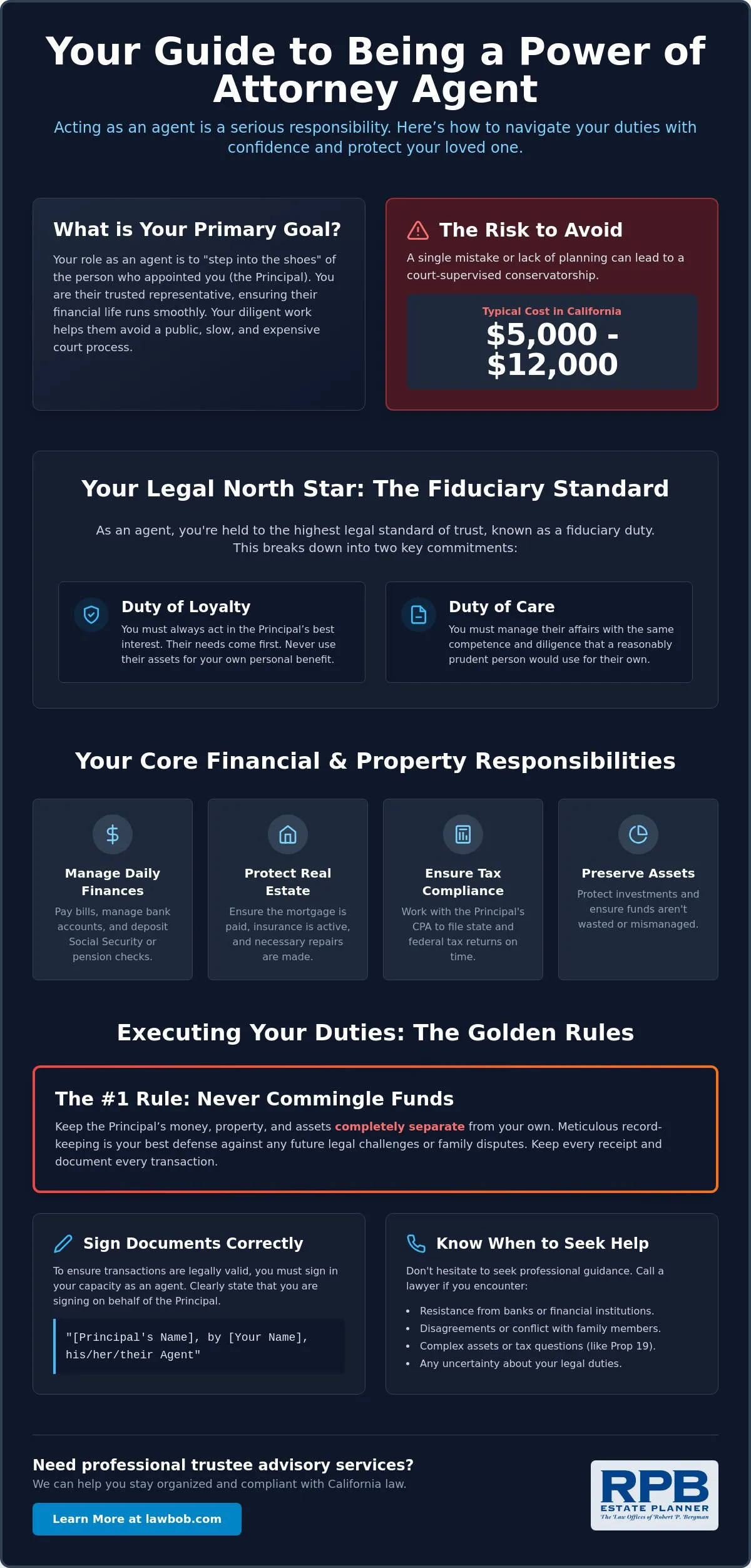
Stepping into the role of a Power of Attorney agent is less about having authority over a loved one and more about acting as the fiduciary architect of their future security. You likely feel a deep sense of honor, mixed with the very real fear of making a legal error or causing family friction over assets. It's a heavy lift, especially when you consider that a mistake or a lack of planning could lead to a court-supervised conservatorship, which often costs between $5,000 and $12,000 in California. Understanding the specific responsibilities of a power of attorney agent is the best way to protect your family and your own peace of mind.
We're here to help you move from uncertainty to confidence. You'll learn the essential legal duties, financial obligations, and best practices for serving as a Power of Attorney agent in California. This guide provides a clear checklist of your duties, explains how to sign documents legally, and helps you recognize exactly when it's time to call a lawyer for professional support.
Key Takeaways
- Understand how the California Uniform Power of Attorney Act defines your role and what it means to "step into the shoes" of your loved one.
- Learn the specific responsibilities of a power of attorney agent, including how to manage daily finances and maintain property while acting as a fiduciary.
- Master the correct legal format for signing documents on behalf of the principal to ensure every transaction remains valid and protected.
- Discover how to balance transparency with family members against the principal’s right to privacy to prevent unnecessary conflict.
- Identify the specific warning signs that indicate when you should seek professional guidance to avoid making costly legal mistakes.
What Does it Mean to Be a Power of Attorney Agent in California?
In California, becoming an agent, often legally called an "attorney-in-fact," means you've been granted the legal authority to act on someone else's behalf under the California Uniform Power of Attorney Act. This legal tool, known as a Power of attorney, allows you to "step into the shoes" of the person who appointed you, known as the Principal. You aren't taking away their rights or their autonomy. Instead, you're acting as their representative to ensure their life continues to run smoothly when they can't manage every detail themselves.
The Fiduciary Standard: Your Legal North Star
As an agent, the law holds you to a high standard called a fiduciary duty. This includes the "duty of loyalty," which requires you to always act in the Principal’s best interest, never using their assets for your own benefit. You also have a "duty of care," which means you must manage their affairs with the same competence and diligence that a prudent person would use. Fiduciary duty is the highest legal obligation one person can owe another.
When Does Your Authority Begin?
Your power might start the moment the document is signed, which is known as "immediate" authority. Many families prefer this because it allows for a seamless transition. On the other hand, you might have "springing" powers that only activate once a specific event occurs, such as the Principal’s incapacity. In Silicon Valley estates, this transition is usually triggered by written physician certifications. Knowing exactly when your authority kicks in is one of the most critical responsibilities of a power of attorney agent to ensure there is never a gap in your loved one's care or financial security.
Core Financial and Property Responsibilities of a California Agent
Tax compliance is another critical duty. You must coordinate with the Principal’s CPA to ensure that state and federal tax returns are filed accurately and on time. Beyond just paying bills, you are tasked with asset preservation. This means you must ensure that assets aren't wasted or spent in ways that contradict the Principal’s established estate plan. Understanding the full scope of the responsibilities that come with the authority is the first step toward successful management.
Handling Silicon Valley Real Estate and Investments
High-value California property requires extra attention, especially regarding Proposition 19. This law can significantly impact property tax assessments when homes are transferred or managed, so you'll want to be careful with any decisions that could trigger a reassessment. You might also find that some financial institutions are "difficult" when you present your paperwork. Banks often have strict internal review processes for a Durable Power of Attorney for Property. Staying persistent and professional is the best way to ensure they honor your legal authority.
Record-Keeping: Your Best Defense
The most important rule for any agent is to never commingle funds. You must keep the Principal’s money entirely separate from your own. Detailed record-keeping is your best defense against future family conflict or legal challenges. Keep every receipt and document every single transaction you make on the Principal's behalf. If the daily management of these tasks feels like a heavy burden, reaching out for trustee advisory services can help you stay organized and compliant with California law.
Practical Steps for Agents: How to Execute Your Duties Correctly
Executing your duties correctly starts with the way you sign your name. To avoid personal liability, you must always indicate that you are acting on behalf of the Principal. When signing a check, a contract, or a deed, use this specific format: "[Principal Name] by [Your Name], Agent under POA." This simple habit protects your personal assets and clearly signals your legal role to third parties, such as banks or the Santa Clara County Clerk-Recorder’s Office.
Successfully managing the responsibilities of a power of attorney agent also requires a delicate balance of communication. You should keep close family members informed to prevent suspicion and conflict, but you must also respect the Principal’s right to privacy. If the workload becomes overwhelming, remember that you aren't trapped in the role. You can resign by following the procedures outlined in the document. You also have the authority to use the Principal’s funds to hire a San Jose estate planning lawyer or a tax professional to ensure you're meeting every legal requirement.
Common Mistakes That Lead to Personal Liability
The fastest way to face a lawsuit is to gift assets to yourself or others without explicit authority in the POA document. Even with the 2026 federal gift tax exclusion set at $19,000 per recipient, an agent cannot make these gifts unless the document specifically allows it. Another frequent error is failing to communicate with the Trustee of the Principal's Revocable Living Trust. If the agent and the Trustee aren't on the same page, bills might go unpaid or assets could be mismanaged, leading to costly disputes.
Transitioning Authority: What Happens When the Principal Passes?
One of the most misunderstood rules in California law is that your authority as a Power of Attorney agent ceases immediately upon the Principal's death. You cannot sign checks or sell property once they have passed away. At that moment, your role ends, and you must hand over all records and assets to the Executor named in the Will or the Trustee handling the trust administration. If you need guidance on your duties during this transition, Explore our Trustee Advisory Services to ensure a smooth and legal hand-off.
Confidently Manage Your Role as a California Agent
Serving as an agent is a noble task that requires you to act as a protective guardian for your loved one’s legacy. By understanding your fiduciary duties and following the practical signing protocols we’ve discussed, you're already ahead of the curve. Your primary goal is to provide stability and avoid the stress and expense of a court-supervised conservatorship. Effectively managing the responsibilities of a power of attorney agent means being both organized and transparent while keeping your personal finances strictly separate from the Principal's assets.
Robert P. Bergman is a California State Bar Certified Specialist with over 40 years of experience in Santa Clara County estate law. He provides specialized Trustee Advisory Services for non-litigated matters to help families stay compliant and maintain harmony during difficult transitions. If you have questions about your specific legal obligations or need help organizing your records, contact Bob Bergman for a consultation on your duties as an agent. You have the tools to succeed in this role, and professional mentorship is always available to help you navigate the process with complete confidence.
Frequently Asked Questions
Can a Power of Attorney agent change the Principal’s Will or Living Trust?
No, an agent cannot change a Will or Living Trust unless the power is explicitly and specifically granted in the document, which is quite rare. Your primary job is to manage the Principal's current financial affairs and protect their assets. If the estate plan needs to be updated, the Principal must do it themselves while they have capacity, or a specialized trust modification petition may be necessary through the court.
Does a Power of Attorney remain valid after the Principal dies in California?
No, a Power of Attorney terminates immediately upon the death of the Principal in California. Once they pass away, you no longer have the legal right to sign checks, sell property, or manage their bank accounts. One of the final responsibilities of a power of attorney agent is to provide a final accounting of your actions to the Executor or Trustee who takes over the estate administration.
Am I personally responsible for the Principal’s debts if I am their agent?
You aren't personally responsible for the Principal's debts as long as you act within your authority and sign documents as an agent. The debt belongs to the Principal and is paid from their assets. You only face personal financial risk if you commingle funds, act with gross negligence, or sign a contract in your own name without indicating your representative status.
Can I be paid for my time and effort as a Power of Attorney agent?
Yes, you are entitled to "reasonable compensation" under the California Probate Code. While many family members serve without pay, you can choose to be compensated for the time-intensive responsibilities of a power of attorney agent. Professional fiduciaries typically charge a fee based on a percentage of the assets, often around 1% to 1.5%, though you should always document your hours and tasks clearly to justify any payment.