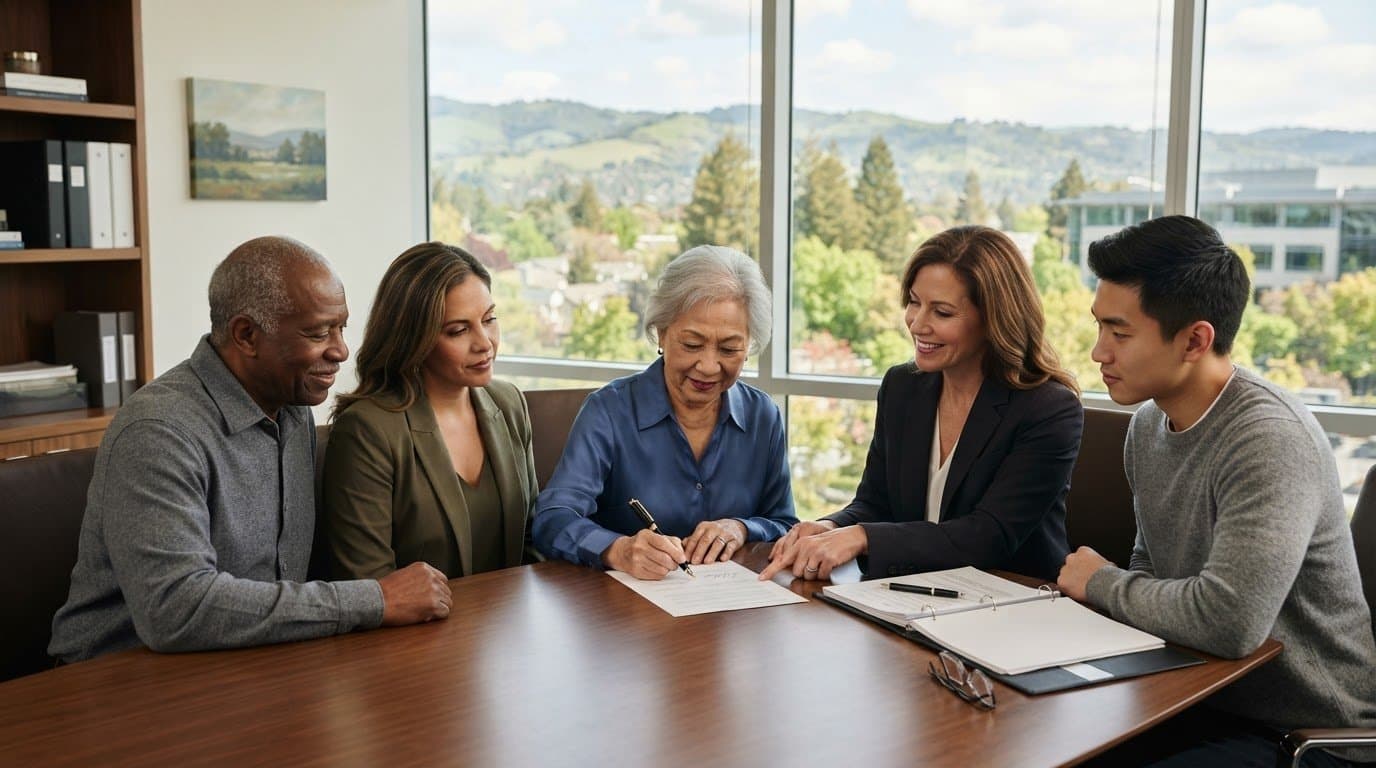
What if a will clearly states your wishes but creates problems because of how it was signed? The requirements for a valid will in California depend on more than what the document says. A typed will generally needs the person making it to sign and two witnesses to be present together. A handwritten will may qualify under a separate rule. A digital file alone won’t meet California’s will formalities.
It’s understandable to wonder whether illness, pressure from someone else, or a beneficiary serving as a witness could put your wishes at risk. Those circumstances don’t all have the same effect, and a beneficiary-witness doesn’t automatically invalidate a will. But execution mistakes or questions about capacity and undue influence can lead to disputes.
This guide explains the basic signing and witness rules, how handwritten wills differ, and common issues that may lead to a challenge. Attorney Robert P. Bergman, a Certified Estate Planning Specialist, personally drafts custom estate plans for families in San Jose and across the greater San Francisco Bay Area. This certification is held by less than 1% of California attorneys. A free 15-minute consultation is available in person or via Zoom to discuss how your circumstances may shape your plan.
Key Takeaways
- Learn the core requirements for a valid will in California, including the signing and witness rules for a standard written will.
- Understand how missing signatures, witness problems, or unclear final intent may affect a will’s validity or invite a challenge.
- Use a short review checklist to spot key issues in a handwritten will, while recognizing that a checklist can’t determine legal validity.
- See why a will may not direct every asset and how it fits into a broader estate plan tailored to your circumstances.
- Recognize when questions about capacity, pressure, or a beneficiary serving as a witness may call for careful legal review.
Table of Contents
- What Makes a Will Valid in California? Start With the Basic Rules
- Which Mistakes Can Make a California Will Invalid, or Easier to Challenge?
- Can a Handwritten Will Be Valid in California? Follow This Signing Checklist
- How Can San Jose Families Reduce Will Problems With a Custom Estate Plan?
What Makes a Will Valid in California? Start With the Basic Rules
Start with three questions: Is there a written document? Was it signed correctly? Were the required steps followed when it was signed? A will is a written document that directs how a person’s property should be distributed after death. It may not control every asset, since some property can pass through other arrangements.
California generally recognizes two routes: a standard witnessed will and a qualifying handwritten will, known as a holographic will. Both express a person’s wishes, but the signing rules differ. For background on the general principles of a will, you can read about broader history and common concepts. California law determines whether a particular document meets this State’s requirements.
Who Can Make a Will in California?
Under California Probate Code section 6100, a person generally must be at least 18 to make a will. The person also needs the mental capacity required by law, addressed in section 6100.5. In plain English, they must understand they’re making a will, have a general understanding of their property, and recognize close family members and how the will distributes property among them. A diagnosis or advanced age alone doesn’t establish that someone lacked capacity when making a will.
What Does a Standard Witnessed Will Require?
A standard will must be in writing and signed by the person making it. California Probate Code section 6110 sets out the witnessing rules. A notarized signature alone doesn’t replace the required witnesses.
A standard California will must be written, signed by the person making it, and signed by at least two witnesses who are present at the same time and understand they’re witnessing a will. Each witness must see the person sign or hear them acknowledge the signature, then sign the will during that person’s lifetime. Having everyone present together helps establish that the document is intended as the person’s will, not a draft or informal note.
These are the central requirements for a valid will in California for a witnessed will. Two signatures on a page aren’t enough by themselves. The witnesses must be present together, and the signing or acknowledgment must happen in their presence. California also recognizes a handwritten-will exception with its own rules, covered separately below.
Which Mistakes Can Make a California Will Invalid, or Easier to Challenge?
A problem with a will can raise two different questions: Did the document meet California’s signing rules? Were the circumstances around its creation proper? A missing required signature or failure to follow witness rules can create a formal validity issue. Claims involving capacity, fraud, pressure, or uncertainty about final intent depend on the evidence and circumstances. An execution defect concerns whether required signing steps were followed. A challenge to how the will was created depends on the facts surrounding it.
That distinction matters. A concern doesn’t automatically mean a will is invalid, and a challenge isn’t proof that anyone acted improperly. The California Courts' guidance on wills offers official information about wills and related court processes.
Execution Errors: Signatures, Witnesses, and Document Changes
For a standard witnessed will, a missing signature from the person making it or a witness who fails to sign as required may undermine compliance with California Probate Code section 6110. The same concern can arise if the witnesses weren’t present together for the signing or acknowledgment. Notarization alone doesn’t replace the witness requirements.
Be careful with edits, too. If someone adds a handwritten gift, crosses out a name, or changes a distribution after signing, it may be unclear which terms the person intended to adopt and whether the change was properly made. For example, a note in the margin naming a new beneficiary could prompt questions about when it was written and whether it was intended to amend the will. Don’t assume an informal change is effective just because it appears on the document.
Capacity, Pressure, and Beneficiaries as Witnesses
Capacity concerns whether the person understood they were making a will and grasped its basic purpose and effect. A medical diagnosis or advanced age by itself doesn’t answer that question. A court’s assessment may depend on what the person understood at the time and the available evidence.
Fraud, duress, or undue influence also requires a fact-specific review. A sudden change in beneficiaries may raise questions, but it doesn’t establish pressure on its own. Similarly, under California Probate Code section 6112, a beneficiary who witnesses a will doesn’t automatically invalidate the entire document. The gift to that witness may face a legal presumption or other issue, depending on the circumstances and applicable rules.
If you’re concerned about a will’s execution or how it was prepared, a personalized estate-planning discussion can help clarify your own planning choices. Attorney Robert P. Bergman personally drafts each custom estate plan, with no template and no paralegal hand-offs. A free 15-minute consultation is available in person or via Zoom through a consultation about your estate plan.
Can a Handwritten Will Be Valid in California? Follow This Signing Checklist
Yes. California recognizes a handwritten will, called a holographic will, but not every handwritten note qualifies. Its requirements differ from those for a standard witnessed will, so consider what is handwritten and what the document actually says before relying on it.
California’s Holographic-Will Rules
Under California Probate Code section 6111, the will’s signature and material provisions must be in the person’s own handwriting. “Material provisions” are the parts that say who receives property or otherwise state the person’s instructions. A holographic will doesn’t need the two witnesses required for a standard witnessed will.
A handwritten will is a testamentary document only when its key instructions and signature meet California’s handwriting rules. Handwriting alone doesn’t turn a note into a will. A date isn’t an absolute requirement in every case, but an undated document can raise questions if there are competing wills or uncertainty about when it was written. Don’t assume that a missing date automatically invalidates it, or that it never matters.
A Practical Review Before You Rely on a Will
Use this checklist as an educational starting point, not a legal determination of whether a document is valid:
- Identify the writer. Does the document make clear who is giving the instructions?
- Look for final instructions. Does it explain what should happen to property after death, rather than read like a draft or passing thought?
- Check the signature and handwriting. For a holographic will, are the signature and material instructions in the writer’s handwriting?
- Review the execution route. If it is a standard witnessed will, were the signing requirements followed? If it is handwritten, don’t assume witness rules apply in the same way.
- Look for later changes. Cross-outs, added names, or separate notes may create uncertainty about which instructions are final.
Then consider the context. A family change, unclear gifts, or uncertainty about who owns an asset may make a broader review helpful. A will is one part of an estate plan, and its role depends on your circumstances and how property is held. Attorney Robert P. Bergman’s estate planning services address how your wishes fit into a personalized plan.
Discuss your will and estate-planning questions## How Can San Jose Families Reduce Will Problems With a Custom Estate Plan?
A correctly signed will is an important starting point, but it’s only one part of an estate plan. The will may not control every asset’s transfer, so consider your instructions alongside how property is owned, who you intend to benefit, and any other planning documents you have. This broader view can help make your wishes clearer and reduce the chance that documents point in different directions.
Why the Will Should Fit Your Family and Other Documents
Family circumstances shape what a plan needs to address. You may want to provide for children, account for a family change, or identify your chosen beneficiaries clearly. Existing documents and the way assets are titled can also affect how your instructions work together. A pour-over will, for example, may accompany a revocable living trust as part of a coordinated plan. It doesn’t mean a will alone controls every asset or guarantees a particular outcome.
Rather than looking only at whether a document meets the requirements for a valid will in California, consider whether it reflects your current wishes and fits with the rest of your planning. A personalized review can help identify unclear directions, outdated choices, or gaps between your documents and your family’s circumstances.
A California-Focused Conversation With Robert P. Bergman
The Law Offices of Robert P. Bergman is located in San Jose and serves families throughout the greater San Francisco Bay Area, including San Jose, Saratoga, Cupertino, Los Gatos, Sunnyvale, Campbell, Milpitas, Mountain View, Los Altos, Los Altos Hills, Palo Alto, Menlo Park, Fremont, Redwood City, Union City, Hayward, and Gilroy. Robert P. Bergman is a Certified Estate Planning Specialist, a credential held by less than 1% of California attorneys. He personally drafts each custom estate plan, with no template and no paralegal hand-offs.
For San Jose families, a conversation about your will can include how it fits with your other documents and the wishes you want your plan to express. Attorney Robert P. Bergman offers a free 15-minute consultation in person or via Zoom. It’s an opportunity to discuss your circumstances and consider what planning may help bring clarity to your family’s future.
Take the Next Step Toward Clearer Estate Planning
Your will is meant to communicate choices that matter to you and your family. Review it when your circumstances or wishes change. Ask whether the document still reflects who you want to benefit and whether it fits with the other arrangements you’ve made. This can help bring clarity to your planning.
Understanding the requirements for a valid will in California is a useful starting point, but applying them to your own documents and circumstances can raise questions. A focused conversation can help you identify what you want your plan to address and consider a practical path forward, without assuming that one document can cover every need.
Schedule a free 15-minute consultation with Robert P. BergmanThoughtful planning starts with your wishes. Take the next step with a clearer sense of direction by scheduling a free 15-minute consultation with Attorney Robert P. Bergman, in person or via Zoom.
Frequently Asked Questions
Does a California will have to be notarized to be valid?
No. A California will generally doesn’t have to be notarized. For a standard witnessed will, notarization can’t replace the required witness signatures, so a notary stamp by itself won’t correct a missing witness step. If a document has already been notarized, check whether it was also properly signed and witnessed. The key question is which execution route the document follows, not whether a notary seal appears on it.
Can a handwritten will be valid in California without witnesses?
Yes. California can recognize a handwritten will without witnesses if the signature and material provisions, meaning the instructions about who receives property, are in the maker’s own handwriting. A handwritten note may still raise questions about whether it was intended as a final will and what property it addresses. A missing date doesn’t automatically invalidate it, but timing can matter if there are conflicting documents or uncertainty about when it was written.
Can a beneficiary witness a will in California?
Yes, but naming a beneficiary as a witness can affect that person’s gift. Under California Probate Code section 6112, a beneficiary-witness can create a presumption that the gift resulted from fraud or undue influence. That doesn’t automatically invalidate the entire will. The gift may be at risk unless the presumption is overcome, including through the statutory protection involving two other disinterested witnesses. Choosing witnesses who receive nothing under the will can avoid this complication.
What happens if a California will is not signed by two witnesses?
If a standard California will lacks two properly signing witnesses, it may not meet the requirements for a valid will in California under the witnessed-will route. That doesn’t settle every case: the document might independently qualify as a handwritten will if it meets the handwriting rules. For example, a typed will with only the maker’s signature generally won’t qualify as handwritten just because it was signed. Review its format and signing history before drawing a conclusion.
Can an electronic document or text message count as a will in California?
Generally, no. California doesn’t recognize an electronic or digital file as a valid will under the rules described here. A text message also isn’t a handwritten will because its words are typed, not written by hand. An online-prepared document must be printed and then physically signed under the applicable will formalities. Saving, emailing, or texting a file doesn’t substitute for that process. Keep the signed document with other important records so it can be located.
Can a will be challenged if the person had dementia or was pressured?
Possibly, but a dementia diagnosis alone doesn’t decide whether a will is valid. The question is whether the person had the required understanding when they made that particular will. Likewise, family persuasion or assistance isn’t automatically undue influence. The concern is whether pressure overcame the person’s free choice. The timing of medical changes, who arranged the signing, and what the person said about their wishes may all matter when the circumstances are evaluated.