
Table of Contents
- 1. Special Needs Trusts – Preserving Government Benefits While Securing Care
- 2. Third-Party Supplemental Needs Trusts – Planning Beyond Your Lifetime
- 3. Pooled Trusts – Cost-Effective Protection for Multiple Beneficiaries
- 4. ABLE Account Coordination Strategies – Maximizing Tax-Advantaged Savings
- 5. Guardianship Backup Plans – Ensuring Comprehensive Legal Protection
- 6. Why Professional Trust Administration Matters – Protecting Your Child's Future
- 7. Our Comprehensive Approach to Disability Planning – The Complete Solution You Need
1. Special Needs Trusts – Preserving Government Benefits While Securing Care
Parents of children with disabilities face a unique planning challenge: how do you ensure your child receives excellent care and support for their entire life, even after you’re no longer here to advocate for them? The answer lies in understanding the right trust structures available to California families.
We work with families in Santa Clara County every week who are wrestling with this question. Many arrive uncertain about which legal vehicles will actually protect their child’s benefits, preserve their quality of life, and give them peace of mind. The good news is that several powerful trust options exist, each designed for different family situations and goals.
A special needs trust (also called a supplemental needs trust) is the foundation of disability planning for most families. Here’s why it matters so much: if your disabled child inherits money directly, they’ll likely lose government benefits like SSI and Medicaid, which are often worth far more than the inheritance itself.
This is where the trust becomes your legal guardian. Instead of leaving assets to your child, you leave them to the trust. The trustee you select uses those funds to pay for items and services that improve your child’s life without disqualifying them from benefits. Think of it as a safety net with intelligent guardrails built in.
What can a special needs trust pay for? Medical care not covered by Medicaid, therapy, education, equipment, recreation, transportation, housing supplements, and personal care attendants. What it can’t pay for: food, shelter, or basic necessities that Medicaid already covers (because doing so would actually reduce their government benefits).
The key takeaway: a special needs trust lets you leave a financial legacy without accidentally harming your child’s access to essential benefits. When you’re creating this trust, the language and trustee selection matter enormously. We’ve seen families with well-intentioned but poorly drafted trusts inadvertently cause more problems than they solved.
What to do next: Schedule a consultation to review your current will or any existing estate documents. We can show you whether your current plan would trigger benefit loss.
2. Third-Party Supplemental Needs Trusts – Planning Beyond Your Lifetime
The third-party supplemental needs trust (created during your lifetime or in your will) is specifically designed for someone other than the beneficiary to fund it. This is the primary vehicle most parents use, and for good reason.
Unlike a first-party supplemental needs trust (which is funded with the disabled child’s own money, like an inheritance or court settlement), a third-party trust is funded by parents, grandparents, and other family members. The difference in tax treatment and reporting is significant.
Here’s a practical scenario: You want to leave $500,000 to your 28-year-old son with autism. Without proper planning, that money disqualifies him from SSI immediately. With a third-party supplemental needs trust named in your will, the trustee receives that $500,000 and manages it strategically. Your son stays eligible for government benefits while the trustee pays for respite care, vocational training, and enrichment activities that the government benefits don’t cover.
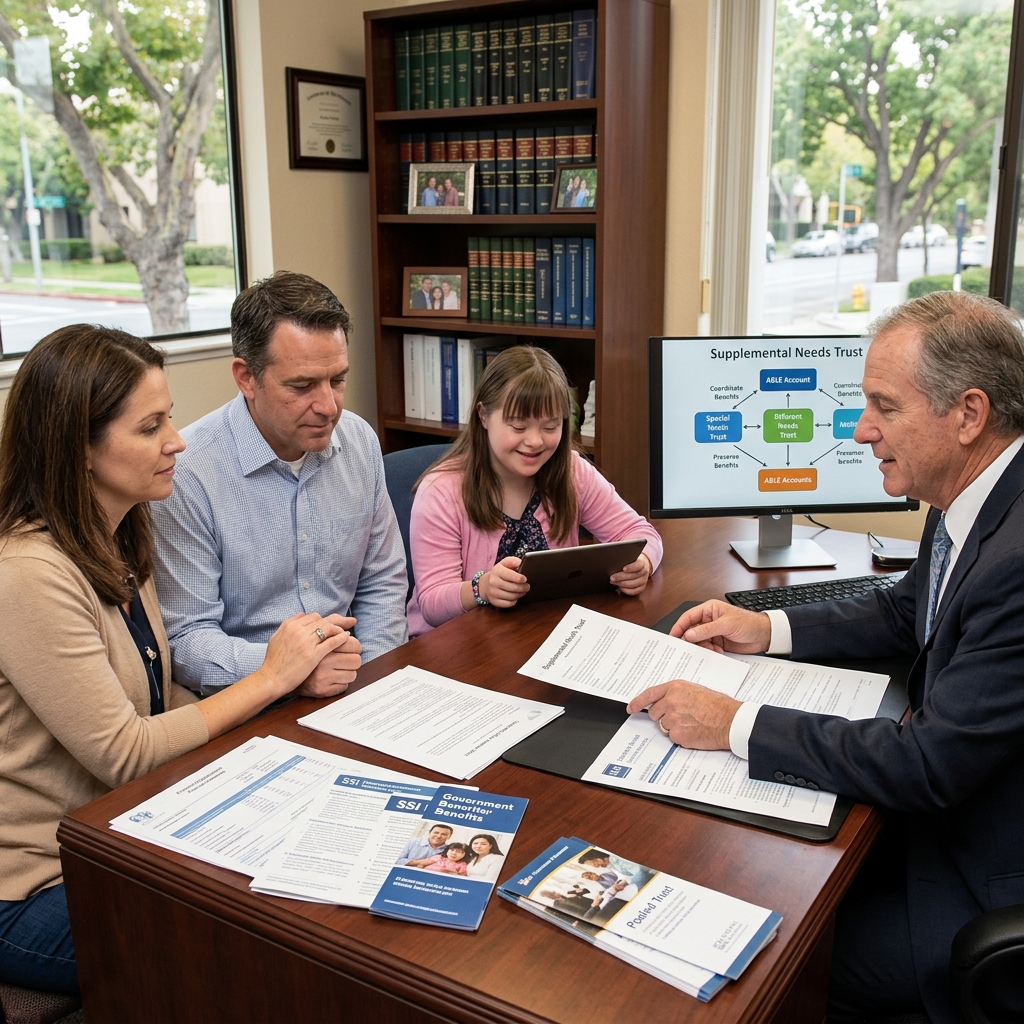
The trustee role is crucial. This person needs judgment, integrity, and willingness to communicate with you about your child’s needs long before they actually step into the role. Many families name a trusted family member, but some choose a professional trustee when no suitable family member is available. We often recommend a co-trustee arrangement: a family member paired with a professional who handles financial decisions.
What to do next: Identify who would make a good trustee for your child after you’re gone. Have a preliminary conversation with them about whether they’d be willing to take on this responsibility, and discuss your vision for how the trust should be used.
3. Pooled Trusts – Cost-Effective Protection for Multiple Beneficiaries
A pooled trust is a trust structure managed by a nonprofit organization that pools together the resources of multiple families, each with a disabled beneficiary. It combines the benefit protections of a special needs trust with a cost-efficient model for families who might not have large estates.
The way it works: a nonprofit holds one master trust with separate accounts for each beneficiary. Your contribution goes into this master trust, but your child’s account remains separate and funds can be used only for your child. When your child passes away, any remaining funds go to the nonprofit (which must use them for disability services). This feature allows the nonprofit to offer the service at lower cost than individual trusts.
Pooled trusts work well for families in these situations: moderate estates where probate costs matter, concern about trustee availability or family conflict, desire for professional oversight combined with disability-sensitive management. They’re less suitable if you want complete control over what happens to leftover funds after your child passes, or if family relationships are stable and you have a trusted trustee already identified.
The nonprofit managing the pool is critical. Look for organizations with deep experience in disability law, strong financial management, and a track record of responsive customer service. We can help you evaluate whether a pooled trust or individual trust makes more sense for your family’s situation.
What to do next: If a pooled trust interests you, request information from California nonprofits that manage them. Ask about investment philosophy, fee structure, and what happens to your money over time.
4. ABLE Account Coordination Strategies – Maximizing Tax-Advantaged Savings
ABLE accounts (Achieving a Better Life Experience) are tax-advantaged savings accounts created specifically for disabled beneficiaries. They’re powerful, but only if you understand how they work alongside trusts.
An ABLE account allows your disabled child to hold up to $20,000 annually (2026 limit) in a special account without it affecting SSI or Medicaid eligibility, as long as the account balance stays under $100,000. The money grows tax-free. This is a major advantage for families who want to set aside funds for their child’s specific needs.
Here’s where the coordination matters: ABLE accounts work best as a supplementary tool, not a replacement for a special needs trust. The account is in your child’s name, so there’s vulnerability to creditor claims. The balance limits mean it can’t hold the large legacies some families want to leave. And ABLE accounts require the beneficiary (or someone with power of attorney) to actively manage contributions and distributions.
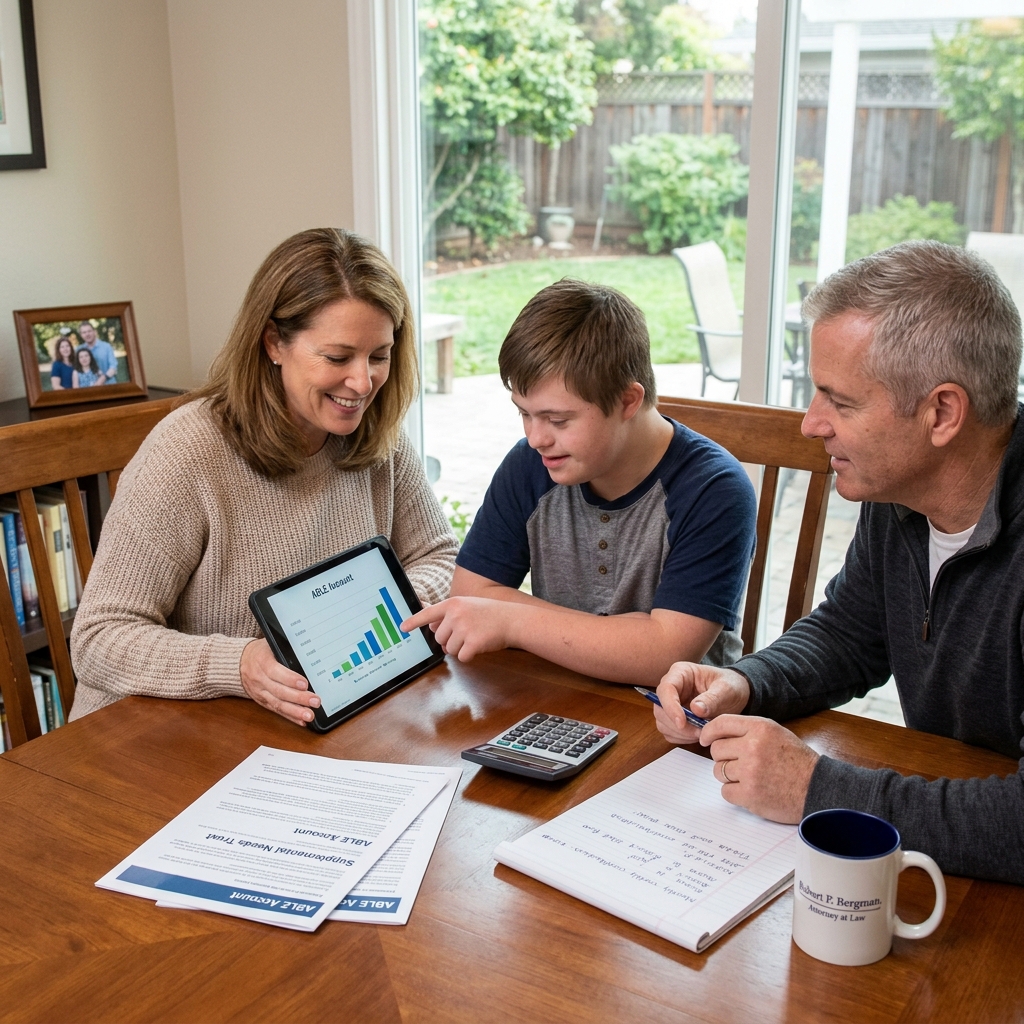
Smart coordination looks like this: a special needs trust provides the foundation and large legacies, while ABLE accounts serve as tactical savings vehicles for specific short-term goals. Maybe the trust trustee contributes $500 monthly to the ABLE account for a summer camp fund. The ABLE account grows separately while the trust retains major assets for long-term care needs.
What to do next: Determine your disabled child’s tax residency status and whether they qualify for an ABLE account. Compare the contribution limits and restrictions against your family’s specific income and asset picture. We can help you model whether an ABLE account adds value to your overall plan.
5. Guardianship Backup Plans – Ensuring Comprehensive Legal Protection
A well-structured trust handles financial management beautifully, but it doesn’t handle personal and medical decision-making. That’s where conservatorship in California comes in, and it needs to be coordinated carefully with your trust plan.
Conservatorship is a court process that gives one person legal authority to make personal, medical, and sometimes financial decisions for an adult who lacks capacity. If your child becomes an adult and still cannot make independent decisions, you’ll likely need a conservatorship in place after you’re gone.
Many families make the mistake of creating an excellent special needs trust but neglecting to plan for conservatorship succession. Then the trust is perfectly funded and managed, but no one has legal authority to consent to medical treatment or make personal decisions for the disabled person. It’s like having a car with a full tank of gas but no valid license to drive it.
The coordination strategy is straightforward: name someone as successor guardian (usually the same person who will serve as trustee, or a trusted family member), prepare guardianship documents in advance, and consider whether limited guardianship (decision-making in only specific areas) might be appropriate instead of full guardianship.
In California, you can also use advance healthcare directives and financial powers of attorney to avoid conservatorship for some decisions, giving your child more autonomy while still protecting them. This is a nuanced area where the right approach depends entirely on your child’s actual capabilities and your family’s dynamics.
What to do next: Have your child assessed by a professional (psychologist or physician) regarding their capacity to make decisions. This assessment guides whether you need full or limited conservatorship, and which decisions can be handled through powers of attorney instead.
6. Why Professional Trust Administration Matters – Protecting Your Child’s Future
Creating a trust on paper is only half the battle. What happens after? The trustee’s actual performance determines whether your child’s quality of life stays protected or quietly erodes.
We’ve seen situations where well-intentioned trustees didn’t understand special needs rules and made distributions that triggered benefit loss. Others were so restrictive with spending that the disabled beneficiary lived minimally despite adequate funding. A few went years without communicating with the beneficiary or assessing whether their needs had changed.
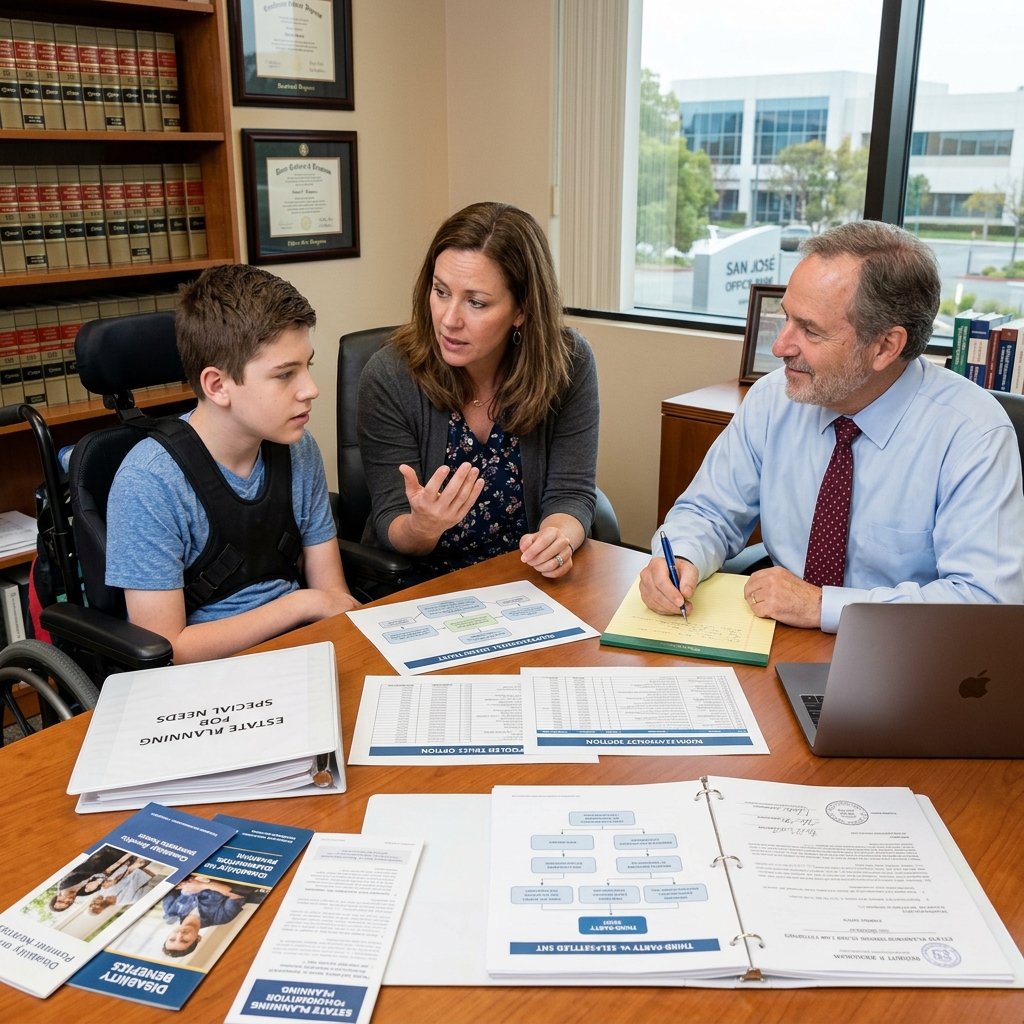
Professional trust administration means having someone (individual or corporate) with genuine expertise in special needs law, benefit rules, and tax implications managing the trust decisions. They understand that distributing $200 for therapy doesn’t cause benefit loss, but distributing $200 for food does. They know when to pay providers directly versus reimbursing your child. They maintain detailed records in case government benefits are ever questioned.
This doesn’t necessarily mean a corporate trustee is always better than a family member. A family member with good training, clear written guidelines, and access to professional advisors can do excellent work. What matters is that someone competent oversees the financial decisions in ways that truly serve your child’s interests.
What to do next: Discuss with your current or potential trustee what support they’ll need to do this job well. Consider whether professional co-trustee involvement or full professional administration would provide better protection.
7. Our Comprehensive Approach to Disability Planning – The Complete Solution You Need
Creating the right trust for a disabled child isn’t a single decision. It’s a coordinated plan that integrates estate planning trusts, conservatorship planning, ABLE account strategy, and trustee selection into one cohesive system.
At the Law Offices of Robert P. Bergman, we’ve worked with many California families on disability planning. We don’t just draft documents. We help you think through the real-world scenarios: What if your child’s needs change in five years? What if your chosen trustee becomes unavailable? What if your child receives a financial settlement? How do we balance independence with protection?
Our comprehensive approach includes:
- Detailed special needs trust drafting with clear guidance for your trustee
- ABLE account coordination tailored to your child’s situation
- Successor trustee selection and training
- Regular reviews as your family’s circumstances change
We also help families navigate the specific rules that apply in Santa Clara County and throughout California. State law and benefit regulations change, and your plan needs periodic review to stay effective.
Here’s what makes the difference: families who work with us don’t just have documents in a drawer. They have a clear plan they understand, trustees who know how to implement it, and ongoing support as circumstances change. Their disabled children have financial security and the resources to live meaningful lives, even after their parents are no longer here to provide daily care.
The families who struggle most are those who tried to handle this alone, created generic documents, or didn’t think through how different pieces of the plan interact. By then, it’s often expensive to fix mistakes.
If you have a disabled child and want to ensure lifelong care and financial security, we’re ready to help. Let’s schedule a consultation to review your current situation, identify gaps, and design a comprehensive plan that actually protects your child’s future. That’s the peace of mind you deserve.