
Table of Contents
- Why Families in Santa Clara County Need Professional Guidance
- The Challenge of Planning Your Estate Without Expert Help
- How Our Comprehensive Consultation Process Works
- What Documents We'll Review Before Your Appointment
- During Your Consultation: Key Topics We Cover
- How We Assess Your Family's Unique Needs
- Creating Your Personalized Estate Plan Strategy
- Understanding Your Trust and Will Options
- Timeline and Next Steps After Your Consultation
- Why Our Approach Ensures Peace of Mind
- Getting Started: Schedule Your Consultation Today
Why Families in Santa Clara County Need Professional Guidance
California’s probate system is complex, and Santa Clara County’s real estate values mean that most families here have more at stake than they realize. Without proper planning, your family could face a lengthy and expensive probate process, court fees, and delays in distributing your assets to the people you care about most.
We’ve worked with hundreds of Santa Clara County families, and the common thread is this: most people put off estate planning because they’re unsure where to start. They don’t know what documents they actually need, whether a trust makes sense for them, or how to protect minor children or family members with special needs. That uncertainty costs them time and, often, money.
Professional guidance helps you avoid costly mistakes. A lawyer who understands California law and Santa Clara County’s specific challenges can identify gaps in your current situation and create a strategy tailored to your family’s goals. This is not one-size-fits-all work, and it shouldn’t be.
The Challenge of Planning Your Estate Without Expert Help
Many people try to handle estate planning on their own using online templates or generic documents. While these tools are inexpensive upfront, they often create problems later.
Here’s what we see happen: families use a basic will template, fail to properly fund a trust, or create documents that conflict with California law. When someone passes away, the family discovers that the documents either don’t do what was intended or create confusion about what the person actually wanted. This forces the family into costly legal disputes or probate court.
Another common misstep is forgetting about accounts and assets altogether. You might have a will, but if your beneficiary designations on retirement accounts or life insurance policies are outdated, those assets bypass your will entirely and go to whoever you named years ago. Without a comprehensive review, these inconsistencies go unnoticed until it’s too late.
Medical decisions also get overlooked. If you become incapacitated and haven’t signed an Advance Health Care Directive, hospitals may turn to the courts to determine who can make decisions about your care. This delays treatment and costs your family thousands in legal fees.
The real risk isn’t the cost of getting help now; it’s the cost of not getting help and leaving your family to sort out the mess afterward.
How Our Comprehensive Consultation Process Works
Our initial consultation is designed to give us a clear picture of your family situation and help you understand exactly what we recommend.
The process starts with a Planning Priorities Quiz that you fill out before we meet. This covers basic information like your family structure, general asset size, and your main concerns. It saves time and ensures that when we sit down together, we’re focused on the details that matter most to your family.
During the consultation itself, we walk through your specific situation, answer your questions in plain English, and explain your options without pushing you toward any particular strategy. We listen more than we talk because your goals and values should drive the plan we create, not a template.
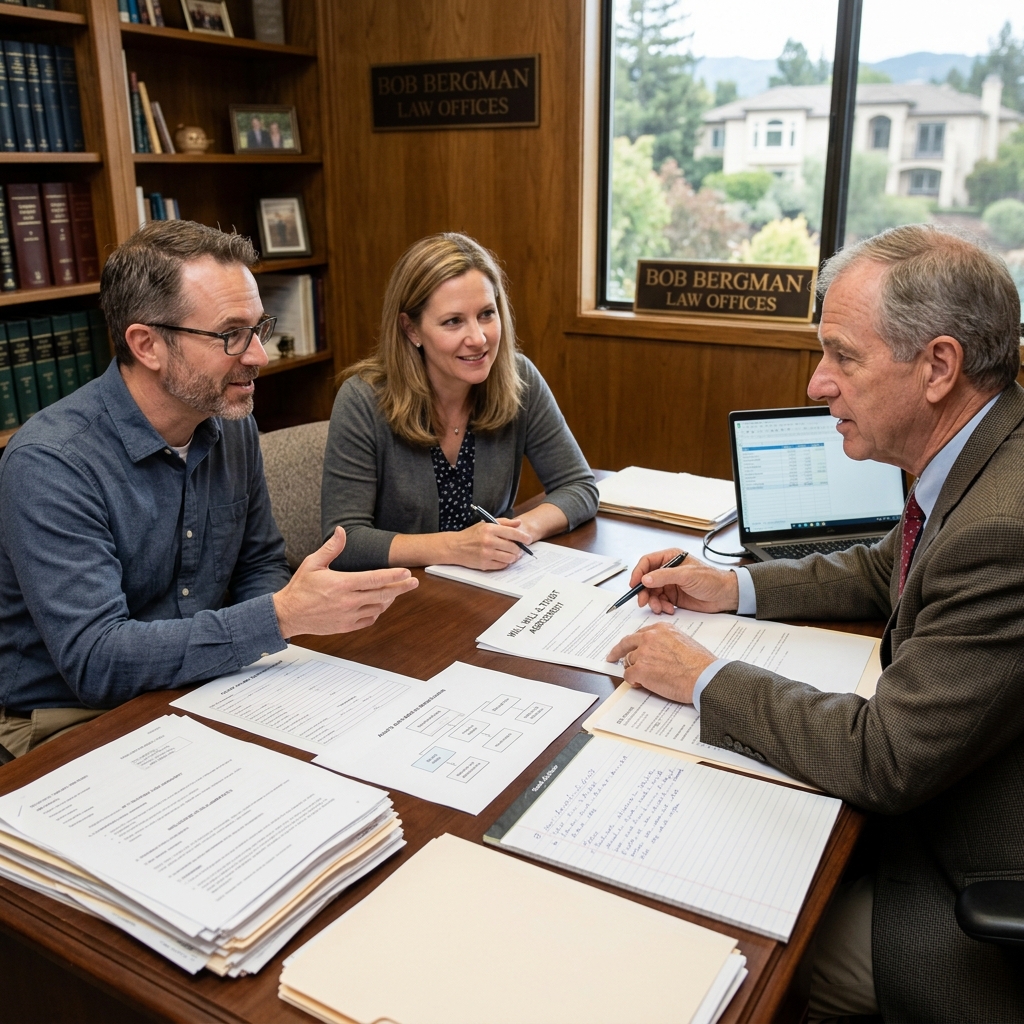
After the meeting, we provide a written summary of what we discussed and our initial recommendations. This gives you time to think it over and ask follow-up questions before committing to any documents.
What Documents We’ll Review Before Your Appointment
Come prepared with whatever estate planning documents you already have. Bring any existing wills, trusts, financial powers of attorney, or Advance Health Care Directives. If you have life insurance policies, retirement account statements, or property deeds, bring those too.
You don’t need to organize these perfectly. Even scattered documents are helpful because they show us what you’ve already thought about and what gaps might exist. If you’ve named guardians for minor children in a will but never funded a trust, we’ll spot that. If your power of attorney was signed five years ago and doesn’t include language to work with digital assets, we’ll flag it.
Having these documents in hand also helps us understand what past attorneys may have recommended and whether those recommendations still serve your current family situation. Life changes, tax laws change, and your plan should evolve accordingly.
During Your Consultation: Key Topics We Cover
We typically spend one to two hours together. Here’s what we discuss:
Your family structure and who you want to provide for. If you have minor children, we talk about guardianship and how to protect their inheritance. If anyone in your family has special needs, we explain how to leave them money without disqualifying them from government benefits.
Your assets and what happens to them. We review your real estate, bank and investment accounts, retirement accounts, business interests, and any other significant property. For each, we discuss the best way to title it and transfer it to the people you want to benefit.
Probate avoidance. We explain how a revocable living trust works and whether it makes sense for your situation. Not every family needs one, but most do, and understanding the mechanics helps you make an informed decision.
Tax planning. Depending on your wealth and family situation, we discuss whether you might face state or federal estate taxes and what strategies could minimize those taxes.
Healthcare and incapacity planning. We cover what an Advance Health Care Directive does and who you want to make medical decisions if you can’t.
Financial power of attorney. We discuss who should manage your finances if you become unable to do so yourself.
How We Assess Your Family’s Unique Needs
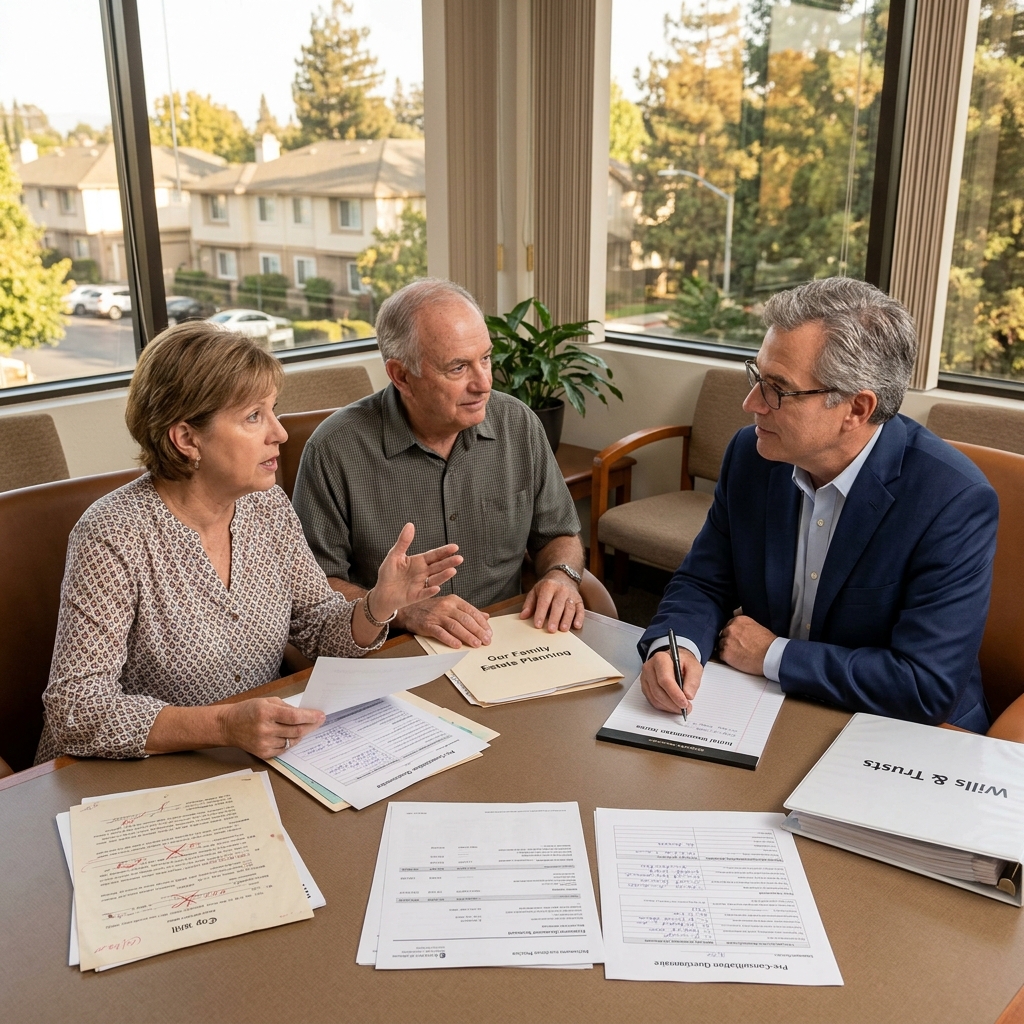
Your needs are different from your neighbor’s or your friend’s, and our assessment reflects that.
We ask questions about your relationships, your financial situation, and your main worries. Do you have concerns about a child’s spending habits? Would you rather keep property in the family long-term, or give people the freedom to sell? Do you want to support charitable causes? Are any family members going through a difficult time that might affect how you structure things?
These conversations help us understand what matters most to you. Some clients prioritize tax efficiency; others prioritize simplicity. Some want maximum control even after they’re gone; others believe in giving beneficiaries flexibility. There’s no right answer, but there is a right answer for you.
We also assess potential risks. If you have minor children and no named guardians, that’s a critical gap. If you own property in multiple states, that’s a complexity we need to address. If you have a business, we discuss succession planning and how to protect it for your family or transition it smoothly.
Creating Your Personalized Estate Plan Strategy
After the consultation, we develop a specific strategy tailored to your family.
This usually includes a detailed written recommendation that explains which documents you need, how they work together, and why we recommend them for your situation. We explain trade-offs. For example, a revocable living trust costs more upfront but saves your family money and stress later by avoiding probate. We help you understand whether that trade-off makes sense for you.
We also provide an estimate of costs so there are no surprises. Our goal is to give you a clear, actionable plan that you understand and feel confident moving forward with.
Understanding Your Trust and Will Options
California law gives you several tools, and the right tool depends on your goals.
A revocable living trust is our most common recommendation. It allows you to manage your assets during life, but if you become incapacitated, someone you name steps in automatically without court involvement. At your death, your successor trustee distributes assets to your beneficiaries according to your instructions, again without probate. This process is faster, more private, and usually less expensive than probate.
An irrevocable life insurance trust protects life insurance proceeds from estate taxes and makes sure the death benefit goes where you want it to go.
A special needs trust lets you provide for a family member with a disability without causing them to lose government benefits. A pet trust ensures your beloved companion is cared for according to your wishes.
A financial power of attorney lets someone you trust pay bills and manage money if you can’t. An Advance Health Care Directive does the same for medical decisions.
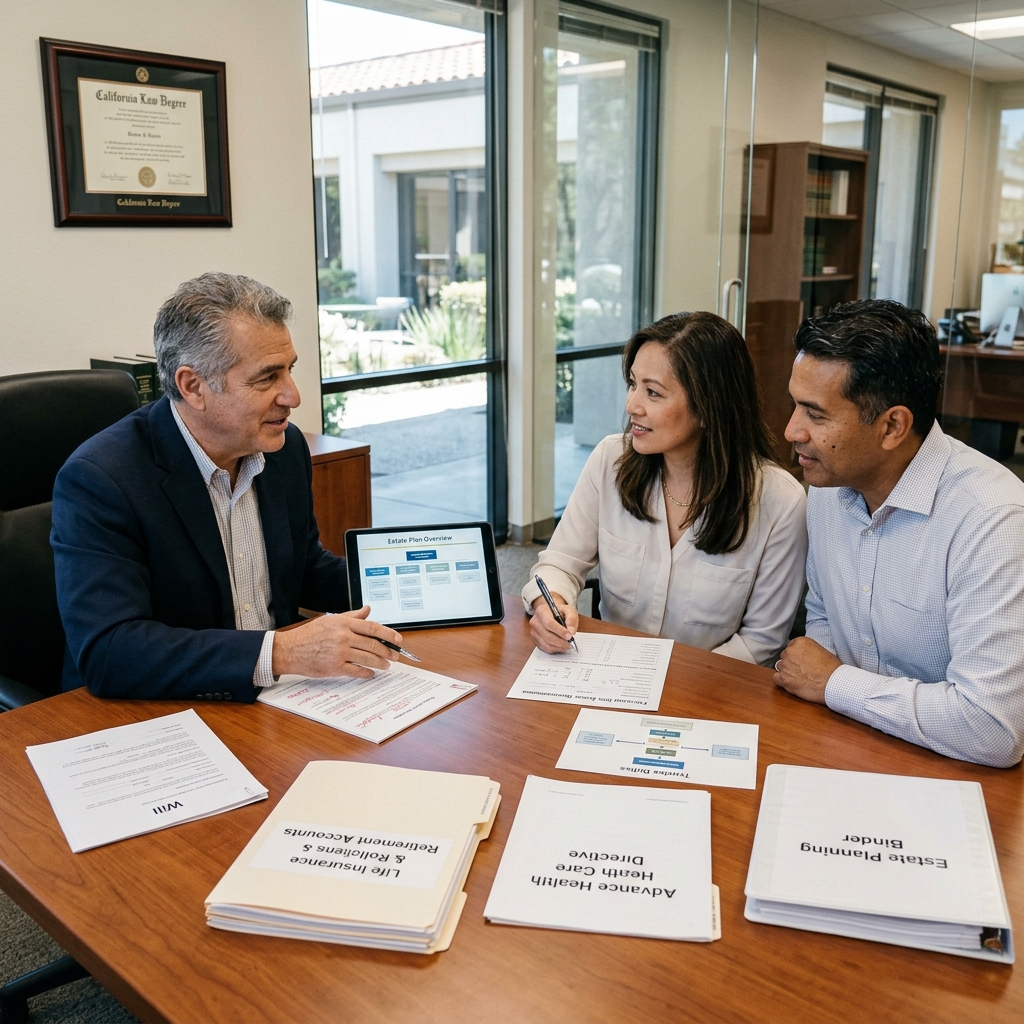
During your consultation, we explain which of these actually apply to your situation. You don’t need every tool, and we won’t recommend unnecessary documents.
Timeline and Next Steps After Your Consultation
After we meet and provide our written recommendation, you typically have a few weeks to think things over and ask any remaining questions.
Once you decide to move forward, the document drafting process usually takes two to three weeks. We prepare customized documents based on your specific instructions and circumstances. You’ll review them carefully, and we’ll make any revisions until everything is exactly as you want it.
The signing process itself is quick. Most people sign all necessary documents in a single appointment. We coordinate with a notary, explain each document as you sign, and make sure everything is properly executed.
After signing, we instruct you on how to “fund” your trust if you created one. We handle the funding of California real estate and assist you in obtaining funding of real estate in other states. This step is crucial and often overlooked.
Why Our Approach Ensures Peace of Mind
Peace of mind isn’t just about having documents in a drawer. It’s about knowing that your family is protected, your wishes will be respected, and there won’t be confusion or conflict when something happens to you.
Our approach ensures this because we take time upfront to understand your situation, we explain everything clearly, and we create documents that actually reflect your values and goals. We don’t rush. We don’t use templates. We listen.
You also get ongoing access. If your situation changes, if you have questions about your plan, or if you need to update documents, we’re here. Estate planning isn’t a one-time transaction; it’s a relationship.
Getting Started: Schedule Your Consultation Today
The hardest part is usually just making the call. If you’re ready to protect your family and create a plan that works for your specific situation, reach out to us today.
Contact The Law Offices of Robert P. Bergman to schedule your initial wills and trusts consultation. We’ll walk you through the process step by step, answer all your questions, and give you a clear roadmap for protecting what matters most.
Your family’s security is worth the conversation. Let’s get started.
