
Table of Contents
- Why Every San Jose Family Needs Both Documents
- Understanding Advance Health Care Directives: What They Do
- Understanding Powers of Attorney: Financial and Medical Authority
- Key Difference: Scope of Authority and Decision Making
- Key Difference: When Each Document Takes Effect
- Key Difference: Who Can Serve as Your Agent
- Why Our Comprehensive Approach Beats Piecemeal Planning
- How We Integrate Both Documents Into Your Estate Plan
- Common Mistakes Families Make with Incomplete Healthcare Planning
- Our Process: Ensuring Your Directives Are Legally Sound
- Making Your Final Decision: Why Choose Our San Jose Services
- Next Steps: Schedule Your Estate Planning Consultation Today
Why Every San Jose Family Needs Both Documents
Most San Jose families think they need one document to handle their medical and financial wishes. They’re wrong, and that confusion costs them dearly when crisis strikes. An advance health care directive and a power of attorney serve completely different purposes, yet they work together as your safety net during life’s most vulnerable moments.
We’ve worked with hundreds of Santa Clara County families who thought a single document covered everything. Then a stroke happened. Or a car accident. Suddenly, their loved ones discovered they had authority to pay medical bills but no legal right to refuse life-sustaining treatment. Or worse, they could make healthcare decisions but couldn’t access bank accounts to cover her care.
That gap is what we help you avoid.
Think of your advance health care directive and power of attorney as two separate locks protecting different doors. One secures your medical choices; the other controls your finances. Without both, you’re leaving critical decisions to chance and courts.
California law recognizes these as distinct instruments for good reason. When you’re unable to communicate, hospitals need legal proof that someone can speak for your medical care. Simultaneously, your family may need immediate access to funds for treatment, medications, or living expenses. A single document can’t legally accomplish both tasks.
Consider Sarah, a local tech executive who suffered a major stroke at 52. Her daughter had power of attorney over her finances but not her healthcare decisions. The bank let her daughter pay for in-home care, but the ICU needed a separate healthcare proxy to decide whether to continue aggressive treatment. Three days of legal wrangling delayed Sarah’s care while her family scrambled.
Having both documents in place prevents this scenario entirely. You’re protecting your autonomy and giving your family clear, legal authority to act immediately.
Your action step: Stop viewing these as optional add-ons. Both documents belong in every estate plan, regardless of your age or health status.
Understanding Advance Health Care Directives: What They Do
Your advance health care directive is your voice when you can’t speak. It names a healthcare agent (sometimes called a healthcare proxy) and provides written instructions about your medical treatment preferences.
This document covers several critical areas:
- Life-sustaining treatment decisions: Your wishes about CPR, ventilators, feeding tubes, and dialysis
- Organ and tissue donation: Whether you want to be a donor and any specific restrictions
- Healthcare agent authority: Who makes decisions if you become incapacitated and what limits apply
- Specific medical preferences: Your values around pain management, comfort care, and quality of life
Unlike a power of attorney, your healthcare directive kicks in only when you’re unable to communicate. A doctor’s written determination of incapacity triggers it, not a date on the calendar. This means your preferences guide care even if you slip into a coma suddenly.
We’ve seen families torn apart because a parent’s healthcare preferences were never documented. One sibling wanted everything done to prolong life; another believed their parent would never want prolonged suffering. The hospital followed legal procedure, but the emotional toll and family conflict were devastating and unnecessary.
Your advance health care directive eliminates this guesswork. You’re stating your values directly to your healthcare team, removing the burden of interpretation from people already under enormous stress.
Your action step: Draft your healthcare preferences in writing, specifically addressing what “quality of life” means to you and under what circumstances you’d accept comfort-focused care over aggressive treatment.
Understanding Powers of Attorney: Financial and Medical Authority
California recognizes two distinct powers of attorney that serve different financial and medical purposes.
A financial power of attorney grants someone authority to manage your bank accounts, investments, real estate, and business interests. This person can pay bills, file taxes, handle insurance, and make financial decisions on your behalf. You decide whether this authority begins immediately (springing) or takes effect only if you become incapacitated (springing).
A healthcare power of attorney (sometimes called a medical power of attorney) delegates authority to make specific medical decisions that fall outside the scope of an advance directive. It can authorize someone to access your medical records, consent to treatment, and make healthcare choices day-to-day. This is slightly different from a healthcare agent under an advance directive, though often the same person holds both roles.
The financial power of attorney is what lets your agent handle urgent matters like accessing funds for emergency repairs, paying medical bills, or managing your business while you recover. Without it, your agent might have authority to approve surgery but zero ability to fund it.
We worked with Marcus, a self-employed contractor who suffered a serious fall. His family had an advance healthcare directive naming his spouse as healthcare agent, but no financial power of attorney. His spouse could authorize surgery and physical therapy but couldn’t access the business checking account to pay ongoing operating expenses. The business nearly collapsed during his four-month recovery.
Both financial and healthcare powers of attorney are active while you’re alive and able to communicate. They’re the day-to-day authority documents that keep your affairs moving smoothly, not just for crises but for ordinary situations where you want someone to act on your behalf.
Your action step: List every financial account, business interest, and recurring obligation you’d want someone to handle if you were hospitalized. That’s your roadmap for what your financial power of attorney should cover.

Key Difference: Scope of Authority and Decision Making
Here’s where these documents diverge most clearly: scope and decision type.
Your advance health care directive is exclusively about medical decisions. Your healthcare agent decides on treatment options, life support, medication changes, and end-of-life preferences based on your documented values. They cannot touch your bank account, sell your home, or make business decisions.
Your power of attorney handles money and assets. Your financial agent can access accounts, pay bills, invest funds, and manage property. They have zero authority over medical treatment or healthcare choices.
Think of it this way: a healthcare directive says “if I can’t decide about my medical care, here’s who decides and what I value.” A financial power of attorney says “if I can’t manage my money, here’s who manages it.”
This separation is intentional. Medical and financial decisions require different judgment calls and different expertise. Your trusted healthcare agent might be perfect at respecting your medical wishes but terrible with money. Your shrewd financial advisor might be the right person to manage assets but lack compassion for difficult medical decisions.
California law prevents one person from holding unchecked authority over both domains unless you explicitly want that. That protection matters.
Your action step: Name different agents for healthcare and financial decisions if they bring different strengths. There’s no rule requiring the same person for both.
Key Difference: When Each Document Takes Effect
Timing is the second major distinction between these documents, and it’s crucial for understanding when they actually matter.
Your advance health care directive becomes effective only when you lack capacity to make medical decisions. A doctor must assess that you’re unable to communicate your wishes before your healthcare agent steps in. Until that moment, you retain all authority over your own care, and your directive sits in the background.
Powers of attorney vary by type. A springing power of attorney works the same way as a healthcare directive, activating only upon your incapacity. A durable power of attorney (or an immediately effective power of attorney) goes into force the moment you sign it. Your financial agent can immediately handle transactions with your authorization.
This timing difference creates real-world complications. Imagine you’re in a hospital with a concussion but completely conscious. You can still make your own medical decisions, so your healthcare directive doesn’t activate. But you might want someone paying your bills while you recover, so an immediate financial power of attorney helps.
Conversely, if you’re in a coma from a car accident, your healthcare directive activates immediately because you can’t communicate. Your financial power of attorney (whether springing or durable) also becomes relevant because bills don’t stop accumulating.
We recommend most families use durable financial powers of attorney because financial crises often require immediate action. Healthcare decisions can usually wait a few hours for medical confirmation of incapacity, but bills for your care start piling up immediately.
Your action step: Decide whether you want your financial power of attorney effective immediately or only upon incapacity. Consider whether you’d be comfortable with your agent acting before you’re formally declared incapacitated.
Key Difference: Who Can Serve as Your Agent
The qualifications and restrictions differ between these roles.
Your healthcare agent should be someone you trust completely to honor your medical values, even against family pressure or their personal beliefs. California law requires them to follow your documented wishes, not their own preferences. They should be emotionally stable, available for potentially urgent decisions, and able to communicate with doctors calmly.
Age requirement: Your healthcare agent must be at least 18 and cannot be your healthcare provider (with narrow exceptions), a hospital employee, or anyone who profits from decisions about your care.
Your financial power of attorney can be handled by anyone 18 or older you trust with money. This might be a spouse, adult child, trusted friend, or even a professional fiduciary (someone trained and bonded to manage finances for others). The person should have reasonable financial sense and absolute integrity.
The law prevents most healthcare providers from serving as your financial agent if they’re treating you, preventing conflicts of interest. However, there’s flexibility here that’s absent in healthcare agency.
Many families appoint different people. Your healthcare agent might be an emotionally intelligent adult child; your financial agent might be a detail-oriented sibling or professional advisor. Some families appoint the same person if they’re equally strong in both areas.
We sometimes see families appoint a backup agent for both roles. If your primary healthcare agent becomes unavailable during a medical crisis, you’d want a clear successor.
Your action step: Have honest conversations with your intended agents about their willingness to serve, their understanding of your values, and any conflicts you should address now rather than during an emergency.
Why Our Comprehensive Approach Beats Piecemeal Planning
Many families gather documents from various sources: a healthcare directive from the internet, a power of attorney from an online service, maybe a will from a DIY kit. What they end up with looks complete on the surface but often contains dangerous gaps.
Generic documents miss California-specific requirements. They frequently contain conflicting provisions that create confusion for hospitals and financial institutions. Most critically, they don’t integrate with your broader estate plan, leaving unclear priorities when multiple documents touch the same situation.
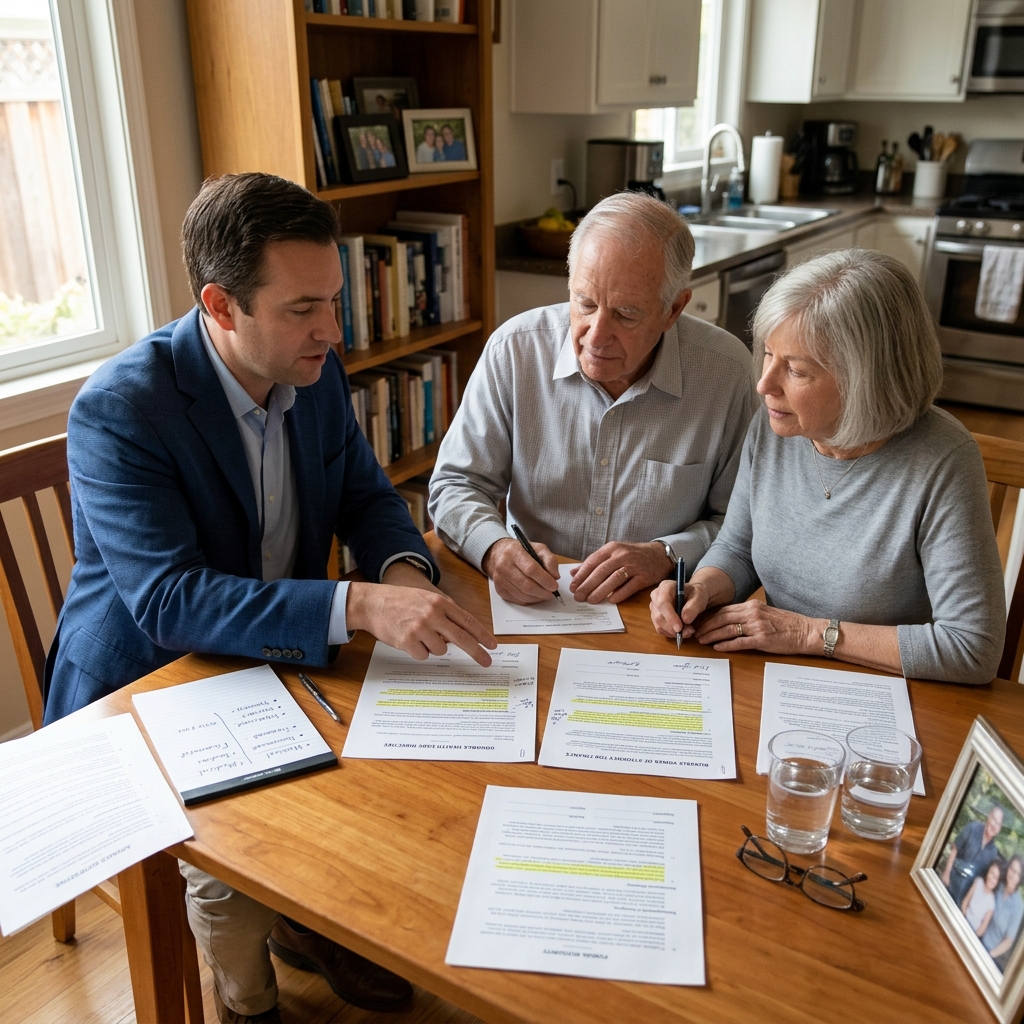
We take a different approach. Rather than treating your advance healthcare directive and power of attorney as isolated documents, we view them as components of a comprehensive estate plan that works together seamlessly.
When you work with us for your San Jose estate planning, we ensure your healthcare wishes align with your financial directives. We clarify what happens if your primary agent becomes incapacitated. We structure your documents so financial institutions immediately recognize your agent’s authority without lengthy verification delays. We identify potential conflicts before they create problems.
For example, if you have a revocable living trust, we make sure your power of attorney references it properly so your agent can manage trust assets without question. If you have specific medical preferences about organ donation, we confirm your healthcare directive aligns with your wishes, not assumptions.
This integrated approach costs more upfront than grabbing forms online. It saves thousands in legal disputes and healthcare delays when crisis actually strikes.
Your action step: Stop thinking of documents as individual checkboxes. Ask whether your estate plan consultant views your documents as connected parts of a unified strategy.
How We Integrate Both Documents Into Your Estate Plan
Our process starts with understanding your complete picture, not just checking healthcare and financial boxes.
We begin with detailed conversations about your values. What does quality of life mean to you? Who do you trust for medical decisions, and why? Where is your money, and who could manage it competently? What happens if your first choice becomes unavailable? These conversations inform everything that follows.
Next, we draft both documents with explicit cross-references. Your healthcare directive identifies who your financial agent is, preventing confusion about roles. Your financial power of attorney acknowledges your healthcare wishes so your financial agent doesn’t inadvertently make decisions that conflict with your medical values.
We ensure both documents reference your other estate planning tools. If you have a revocable living trust, both documents integrate with it. Your power of attorney specifically authorizes management of trust assets. Your healthcare directive acknowledges how your medical care will be funded.
We also build in succession plans. What if your healthcare agent has a heart attack the same week you do? You need clear successor agents for both medical and financial authority, and you need those successors to understand the role before they’re thrust into it during crisis.
Finally, we handle the technical requirements that protect you. California hospitals and financial institutions recognize documents prepared by experienced estate planning counsel. DIY documents often trigger “we need our attorney to review this” delays that cost critical hours.
Your action step: Bring your existing documents to a consultation with us so we can identify gaps and create an integrated plan rather than replacing documents piecemeal.
Common Mistakes Families Make with Incomplete Healthcare Planning
We see predictable errors that cost families stress and money.
Naming the wrong healthcare agent. Many people choose the closest family member without considering whether that person can handle difficult medical decisions without breaking down. We worked with a family where the designated healthcare agent was the deceased’s best friend, not their spouse, because that friend was better at standing firm under pressure. The family was shocked but ultimately relieved when the agent honored the patient’s wishes against the spouse’s emotional objections.
Assuming one document covers everything. We’ve met families who thought their power of attorney also made healthcare decisions or that their healthcare directive could pay bills. When crisis hit, the people they’d named had partial authority but couldn’t act completely.
Failing to update documents after major life changes. A directive naming your ex-spouse as healthcare agent remains legally valid until you revoke it. We review existing documents with clients and discover outdated choices that would create chaos if activated.
Making assumptions instead of documenting preferences. “My family knows I’d never want life support” isn’t legally binding. We’ve seen families torn apart interpreting vague wishes. Specific, written documentation prevents these conflicts.
Not communicating with named agents. Your healthcare agent should know your values before they’re making life-or-death decisions. Your financial agent should understand your account structure before accessing it. Most families skip this conversation and pay for it.
Storing documents where no one can find them. A healthcare directive in your safe deposit box is useless if the hospital can’t access it during emergency. We recommend copies with your healthcare providers and agents, plus one original in an accessible location.
Your action step: Review any existing healthcare documents or powers of attorney. If they’re more than three years old or named someone no longer in your life, they likely need updating.
Our Process: Ensuring Your Directives Are Legally Sound
We don’t just draft documents. We ensure they’ll actually work when you need them.
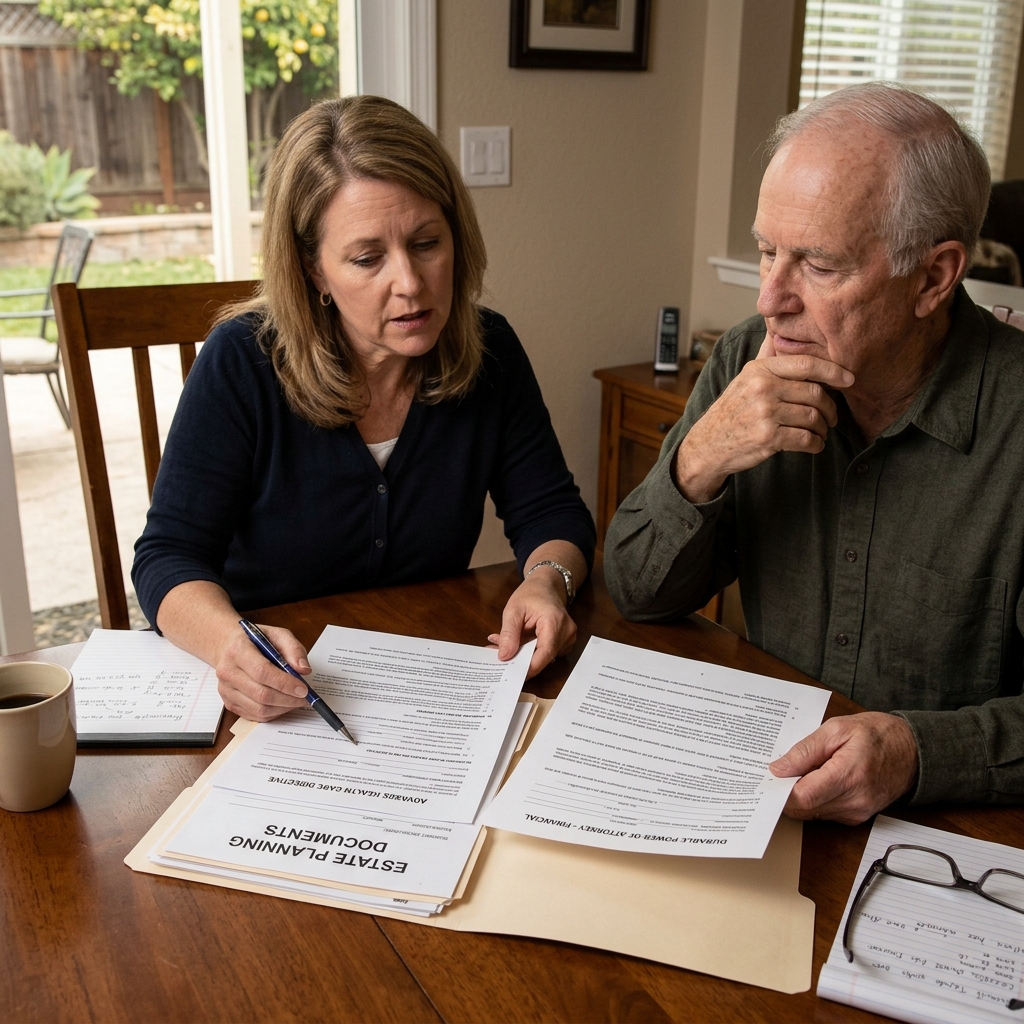
Our process includes thorough capacity assessment. We confirm you understand what you’re signing, the authority you’re granting, and the implications. California law requires this, but we go deeper. We discuss scenarios: “If you’re unconscious but expected to recover, should your agent authorize aggressive treatment? What if recovery means permanent disability?”
We draft with specific language that California hospitals and financial institutions recognize immediately. Generic online forms often use vague language that triggers “we need clarification” requests. Our documents are specific enough to be actionable but flexible enough to cover unforeseen situations.
We ensure proper execution and witnessing. Your healthcare directive and power of attorney must be signed in front of witnesses (usually two, sometimes a notary). The wrong witnesses or improper execution can invalidate the document entirely. We handle this correctly.
We create a comprehensive document package that stays with you. You receive originals, certified copies, and sometimes notarized copies. You receive instructions on where to store documents and how to share them with your healthcare providers and agents.
We schedule follow-up appointments. Life changes. Your preferences evolve. We recommend reviewing your documents every three to five years or after major life events (marriage, divorce, health changes, relocation).
Your action step: Ask any estate planning professional whether they witness your signature and ensure proper execution or whether they simply draft documents and let you handle logistics. Proper execution is non-negotiable.
Making Your Final Decision: Why Choose Our San Jose Services
You have options for handling these documents. You can find templates online. You can hire a general attorney who handles “a bit of everything.” You can work with a dedicated estate planning firm.
Here’s why choosing our estate planning consultation makes sense for Santa Clara County families:
We specialize exclusively in estate planning and probate. We don’t divide attention between bankruptcy, personal injury, and real estate matters. Your healthcare directive and power of attorney are our core expertise, not a side service.
We understand Santa Clara County specifically. Local courts, local healthcare systems, and local financial institutions have preferences in how they interpret documents. We draft knowing how your local hospital and bank will respond.
We integrate your documents. A healthcare directive isn’t separate from your power of attorney, your revocable living trust, or your overall estate plan. Everything works together.
We prioritize communication. We explain what we’re doing and why. We don’t assume you understand legalese. We make sure your decisions are informed and intentional.
We’re responsive. When you need updates or have questions, you reach an actual attorney, not a paralegal following a script.
Most importantly, we remove the risk that your careful planning falls apart because of technical errors or missing provisions. When crisis hits your family, you need documents that work immediately.
Your action step: Stop procrastinating. These documents aren’t things you can handle “eventually.” Accidents don’t schedule themselves around your calendar.
Next Steps: Schedule Your Estate Planning Consultation Today
Your family deserves clear legal protection. Your healthcare wishes deserve a voice even if you can’t speak. Your assets deserve stewards authorized to protect them. These aren’t luxuries; they’re essentials.
Contact us to schedule your estate planning consultation. We’ll review your current situation, discuss your values and priorities, and explain exactly what you need. There’s no pressure, no hidden fees, and no obligation.
During our consultation, we’ll address your specific questions about advance health care directives, powers of attorney, and how they fit into your complete estate plan. We’ll discuss any concerns about naming agents and explain California law clearly.
From there, we’ll provide a clear recommendation for your documents and an estimate for implementation. Most families complete their planning process with us within a few weeks.
Your peace of mind is worth the conversation. Your family’s clarity is worth the investment.
Reach out to us today. We’re here to ensure your wishes are protected and your family is prepared.